Grafton Ghost Town
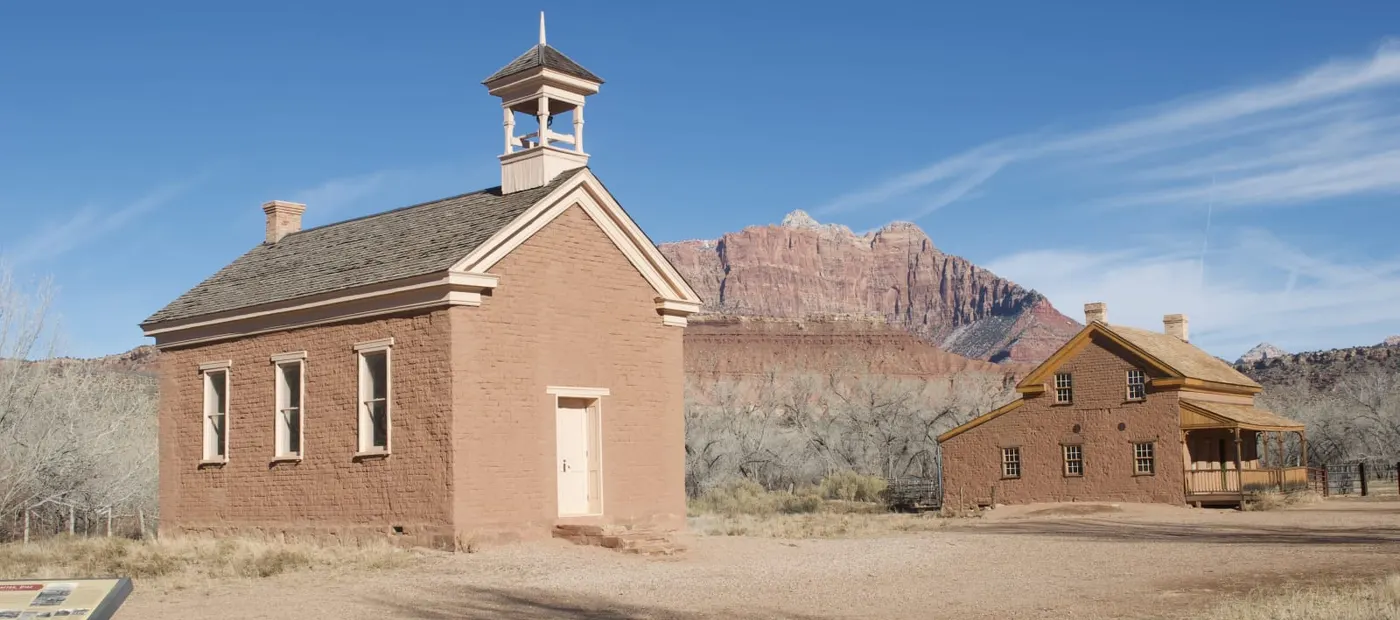
Founded in 1859 and abandoned by the early 1900s, Grafton is one of the best-preserved ghost towns in the American West - a handful of brick and adobe buildings sitting in the open desert, backed by Zion's red cliffs, with nobody inside.
Founded, Flooded, and Forgotten
In the fall of 1859, Thomas Smith led a party of nine Mormon families south from Salt Lake City under Brigham Young's directive to settle the Virgin River valley. They chose a site on the river's south bank, named their new town Grafton after a Massachusetts town one of the founders remembered, and began building.
They farmed cotton, wheat, sorghum, and fruit along the irrigated river flats. They built a school that doubled as a church. They buried their dead on a low rise above the flood plain. For a few years, it worked.
Then the Virgin River reminded them why no one had settled here before. A catastrophic flood in 1862 wiped out crops and washed away homes. The settlers abandoned town, moved a mile upstream, and started again. The relocated Grafton fared a little better - until the Black Hawk War of 1865-72 brought Ute raids to the region, killing at least three Grafton settlers. Families filtered away through the late 1800s. The post office closed in 1877. By 1907 the last year-round residents had left, and Grafton passed quietly into history.
What remained - the brick schoolhouse, two farmhouses, a wooden cabin, and the cemetery - was added to the National Register of Historic Places in 1978. Kane County and the state of Utah have since stabilized the structures and opened them to visitors.
The Buildings
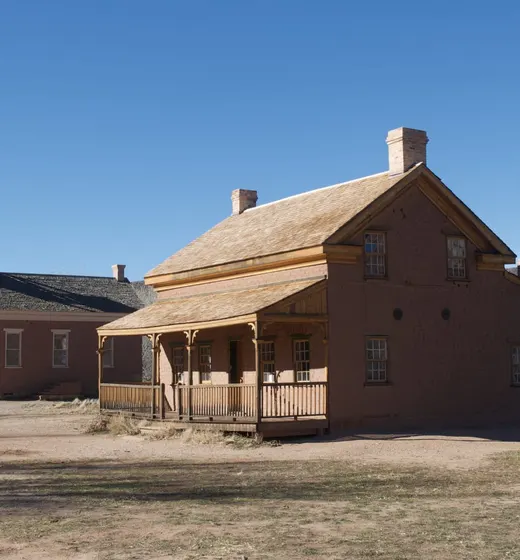
Three main structures remain standing at Grafton, along with several stone and adobe ruins. All are viewable from outside - the interiors are not accessible to visitors.
Schoolhouse / Meetinghouse
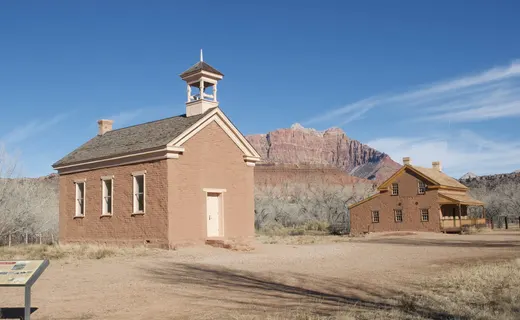
Built in 1886 from locally fired red brick, the schoolhouse served as both the town school and the Sunday meetinghouse. It's the most photographed structure at Grafton - a small bell tower rises from its gabled roof, framing the Zion mountains behind it perfectly. The Butch Cassidy and the Sundance Kid bicycle scene was filmed here.
The Ison House
The two-story farmhouse with the yellow clapboard siding was the home of the Ison family. Its covered front porch and double chimneys hint at how substantial the town once felt - this wasn't a rough camp, it was a community where families intended to stay. The structure has been stabilized but remains appropriately weathered.
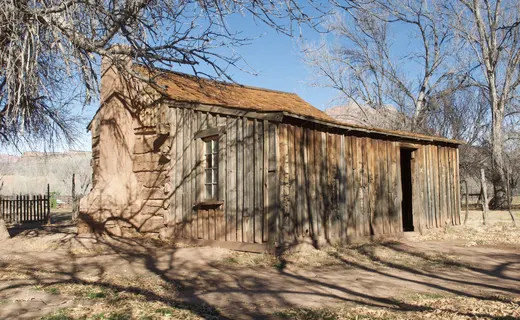
The Old Cabin
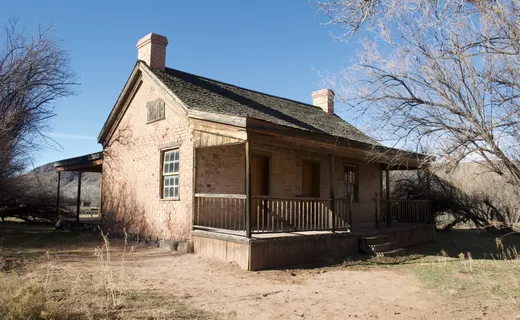
The oldest surviving structure on the site, this rough-hewn wooden cabin predates the brick buildings and shows how settlers built when they first arrived - using whatever materials were at hand. Its stone chimney still stands, and the wooden siding has silvered to the color of the surrounding desert.
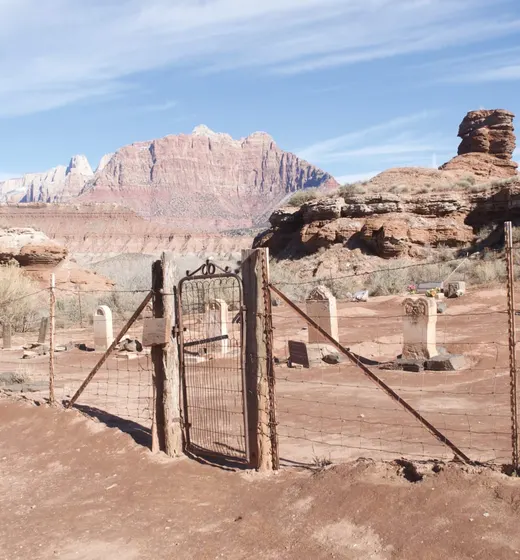
The cemetery gate - a wrought iron frame over packed red earth, Zion's buttes behind.
The Cemetery
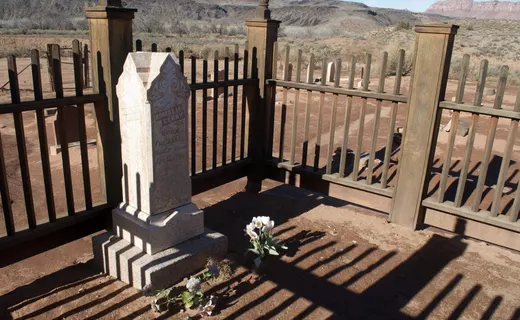
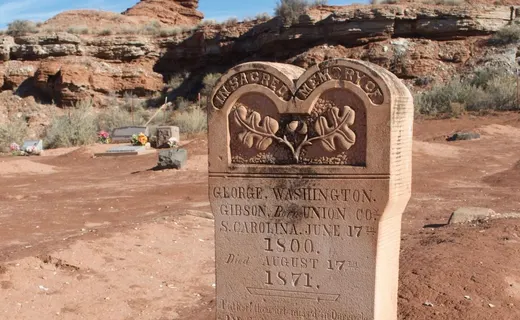
Grafton's cemetery sits on a low rise above the old town site, enclosed by a low wire fence and an iron gate. Approximately 29 marked graves lie within, though the actual number of burials is likely higher - wooden markers rotted away long ago, and the sandy soil shifted with each flood.
The oldest known burials date to the 1862 flood that first drove settlers out. Among those buried are victims of the 1866 Black Hawk War - Grafton was raided by Ute warriors in January of that year, and two men killed are interred here. A third died fighting the following month.
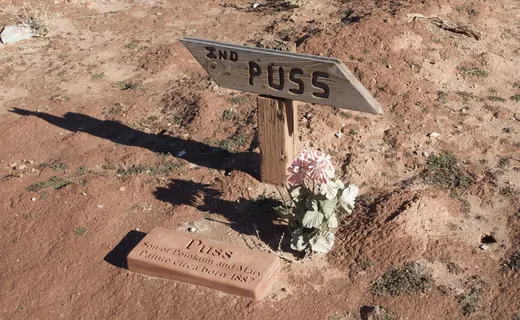
The graves that tend to stop visitors longest are the small ones. A hand-carved wooden sign reads "2nd Puss" - the nickname of a baby boy, son of Prinkum and Mary Dunne, born 1887. The "2nd" tells its own quiet story: a first child, also called Puss, had already been lost. Both families are remembered in stone and wood that has outlasted the houses they once lived in.
Getting There
Grafton is about 6 miles from the Zion National Park entrance - a short detour worth every minute. The road is unpaved for the final stretch but passable for most vehicles in dry conditions. A high-clearance vehicle is helpful after rain.
- From Springdale, take Hwy 9 west toward Rockville (about 3 miles)
- Turn left onto Bridge Road in Rockville - you'll cross the old iron truss bridge over the Virgin River
- Continue south on Grafton Road for approximately 3.5 miles
- Grafton is at the end of the road - you can't miss it
The iron truss bridge you cross in Rockville is itself a historic landmark - one of the last surviving Parker pony truss bridges in Utah, built in the 1920s. It's one-lane, so yield to oncoming traffic.
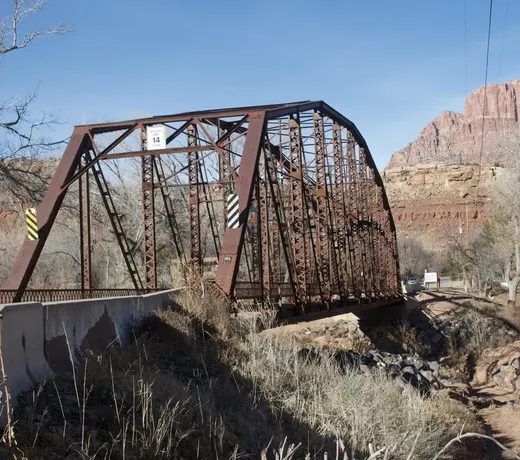
The Rockville bridge - cross this one-lane span and you're on Grafton Road.
More of the Region's History
Grafton is one piece of a much longer story. Learn more about the peoples and cultures that shaped this canyon country.